
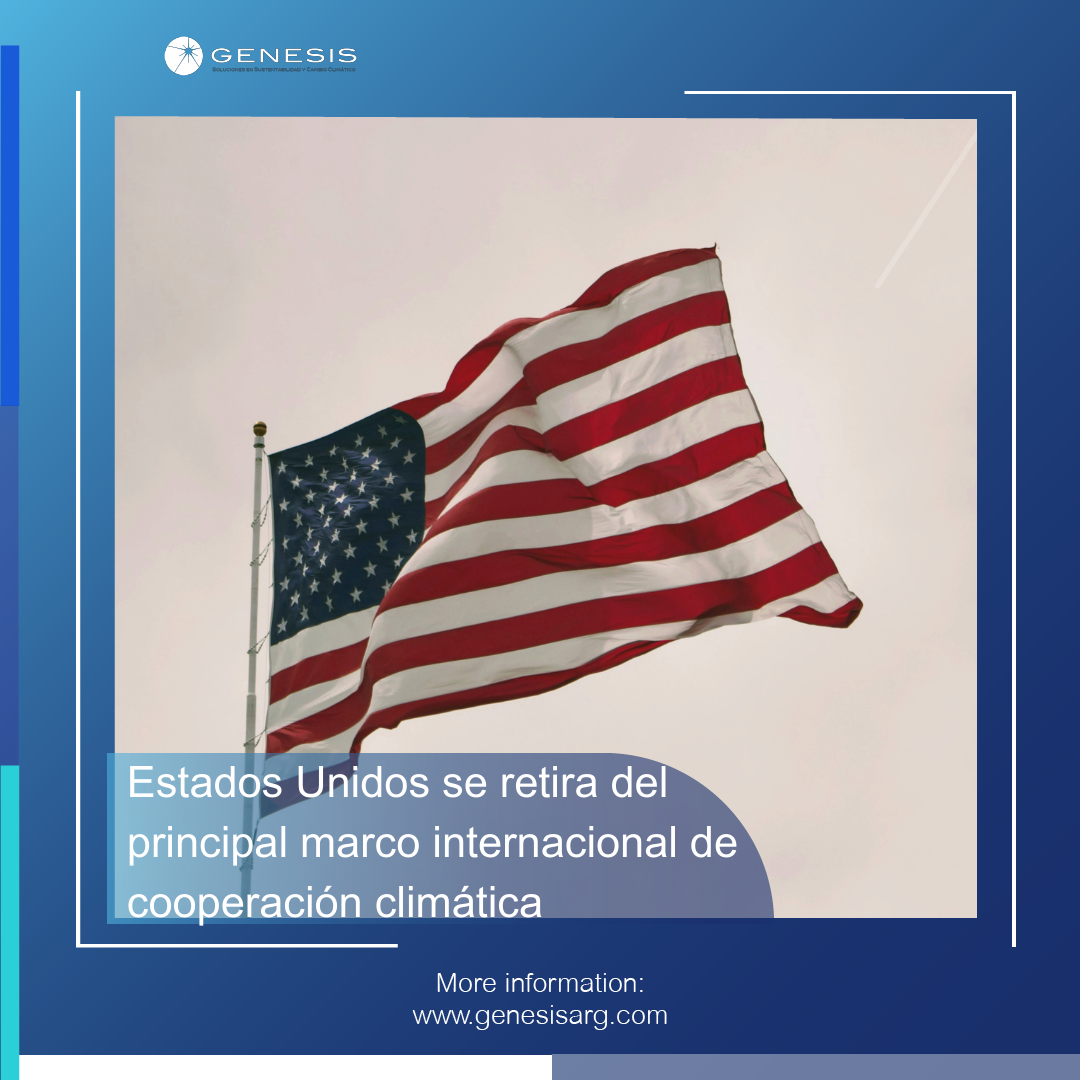
The government of Donald Trump announced the withdrawal of the United States from more than 60 international organizations, including the United Nations Framework Convention on Climate Change (UNFCCC), the treaty that provides the institutional foundation for global climate cooperation, and the Intergovernmental Panel on Climate Change (IPCC), the world’s leading scientific authority on climate change.
This decision represents an unprecedented move: the United States would become the first country to formally withdraw from the UNFCCC, weakening multilateral coordination spaces in the face of the climate crisis. According to the U.S. administration, these bodies promote policies that do not align with national interests and impose high costs on taxpayers.
However, international cooperation under the UNFCCC has been key to reducing projected global temperature increases toward the end of the century. Various analyses indicate that the commitments made under the Paris Agreement have helped lower expected warming, even though current targets remain insufficient to meet the 1.5 °C goal.
The U.S. withdrawal comes amid an intensification of extreme weather events, growing economic impacts, and an accelerating global energy transition. International organizations and civil society actors have warned that this decision could isolate the country from climate finance flows, clean energy investments, and strategic global governance spaces.
Despite this setback, the multilateral process continues. More than 80 countries have recently reaffirmed their commitment to transitioning toward low-carbon economies, reinforcing the idea that global climate action moves forward beyond the decisions of any single government.