
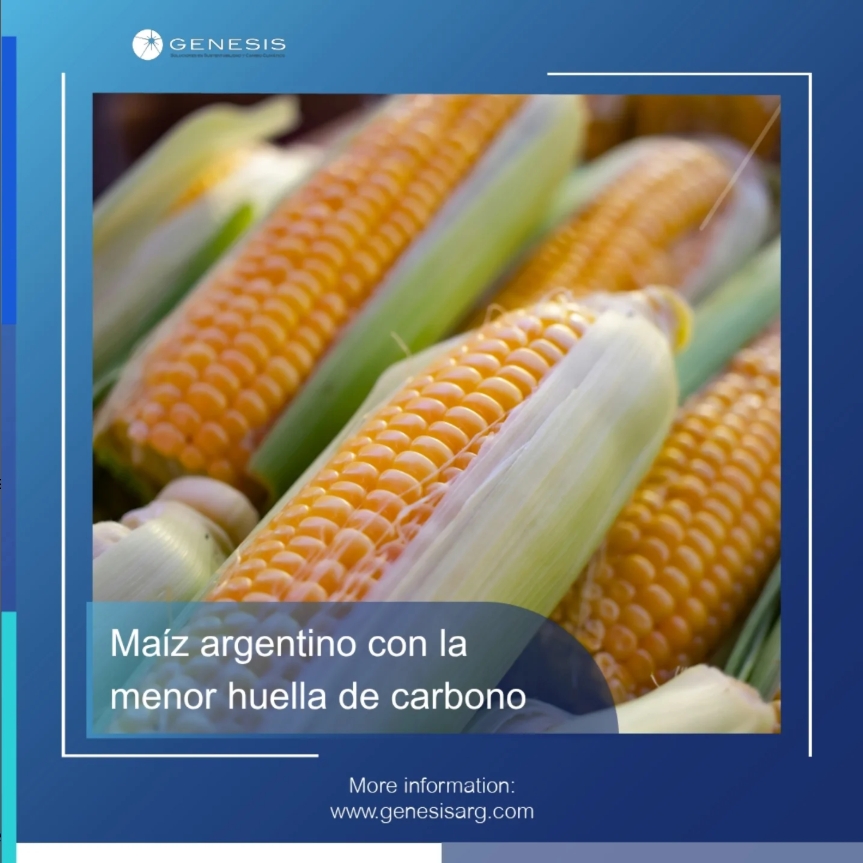
According to research conducted by @intiargentina, @inta.argentina, @maizararg, and @bcbaar, corn 🌽 produced in #Argentina 🇦🇷 generates up to 70% less #CarbonFootprint 👣 than corn from the #UnitedStates and #Europe.
The adoption of best practices—such as no-till farming 🌱 and the use of cover crops—has led to improved soil health and lower emissions.
Based on the 2021/22 season, carbon emissions per kilogram of corn were 0.178 kg CO₂-eq/kg, which dropped to 0.156 kg CO₂-eq/kg when including practices like no-till and cover cropping.
Per hectare, the footprint was approximately 1,248 kg CO₂-eq/ha, and decreased to 1,097 kg CO₂-eq/ha when accounting for soil carbon removals.
This means emissions are between 27% and 70% lower than those of other major producers like the U.S., Brazil, China, Canada, and Europe.
The study highlights that nitrogen fertilization, input production, and residue management account for more than 90% of total emissions.
Various agricultural practices—especially no-till farming (used on 91% of Argentina’s corn area) and the efficient use of fertilizers—are key to this superior environmental performance.